DVLA Number Plate Change: Everything You Need to Know
What is a DVLA number plate change?
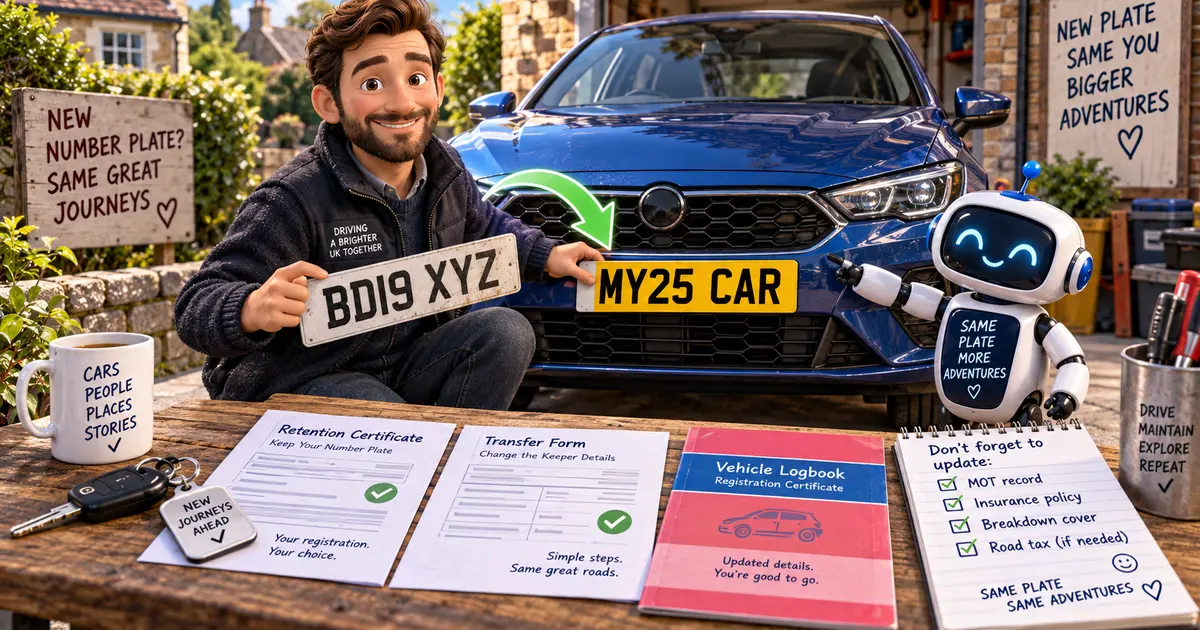
A DVLA number plate change covers three separate processes. Assigning means putting a private plate onto a vehicle, so the car displays the personalised registration instead of its original one. Retaining means taking a plate off a vehicle and holding it on a V778 retention certificate, which is valid for 10 years and renewable. Transferring means moving a plate between two vehicles: the plate is first retained from the first vehicle, then assigned to the second. The term changing number plates DVLA is often used loosely for all three, but each has its own rules, and a DVLA private plate change always involves the same £80 fee.
How to do a DVLA number plate change online
To complete a DVLA number plate change online, the owner needs a valid V5C (or the new keeper supplement) and the authorisation document or assignment certificate. Applications are made through gov.uk/personalised-vehicle-registration-numbers. The fee is £80, whether the application is made online or by post. Postal applicants use the DVLA number plate change form V317 (personalised vehicle registration - transfer or retain), also known as the DVLA number plate transfer form V317. On the question of how much do DVLA charge to change number plate, the answer is the same £80 in every case.
Transferring a plate between two vehicles
A DVLA number plate transfer from one car to another is done in two stages. First, the plate is retained from the donor vehicle and placed on a V778 retention certificate. Second, it is assigned to the receiving vehicle. For a DVLA private plate transfer to another car, both vehicles must be registered in the UK and both must be taxed; if either is old enough to require an MOT, it must have one. The DVLA private plate transfer fee is £80. On how long does it take DVLA to change number plates, online applications are usually processed within days, while postal applications take longer. The DVLA number plate change how long question also depends on whether a V778 DVLA number plate retention transfer is already in place, since an existing certificate speeds up the second stage.
Buying a car with a private plate
Buyers often ask can I transfer private plate without V5. The V5C is the document that proves the registered keeper, so a plate cannot normally be assigned or retained without it or the new keeper supplement. Before purchase, it helps to run a free car check and confirm the seller matches the registered keeper check. For transferring private plate when buying new car, the plate is usually retained by the seller before the sale, and the buyer then assigns it to the new vehicle. Anyone unsure what documents do I need to transfer a private number plate should expect the V5C, the V778 or assignment certificate, and the £80 fee. Every number plate transfer DVLA application follows this pattern.
UK number plate change dates
UK number plates change twice a year. The March release uses the last two digits of the year, so a March 2026 car carries a 26 plate. The September release uses those two digits plus 50, so a September 2026 car carries a 76 plate. Searches for DVLA number plate changes 2026 rise in February and October, just before each release, which is why DVLA number plate changes October is a common query. Anyone asking when do car number plates change UK should note that a DVLA number plate change warning is a letter DVLA sends when a vehicle's registered keeper information or plate details need updating. It should always be acted on, and it is worth using check if a car is taxed before any plate work begins.
Frequently Asked Questions
What does a DVLA number plate change actually involve?
A DVLA number plate change covers three separate processes: assigning, retaining and transferring. Assigning puts a private plate onto a vehicle so it displays the personalised registration instead of its original one. Retaining takes a plate off a vehicle and holds it on a V778 retention certificate, valid for 10 years and renewable. Transferring moves a plate between two vehicles by first retaining it from the donor, then assigning it to the receiving vehicle.
How do I complete a DVLA number plate change online?
To complete a DVLA number plate change online, the owner needs a valid V5C or the new keeper supplement, plus the authorisation document or assignment certificate. Applications are made through gov.uk/personalised-vehicle-registration-numbers. The fee is £80 whether you apply online or by post. Postal applicants use form V317, the personalised vehicle registration transfer or retain form.
How much do DVLA charge to change a number plate?
The fee is £80 in every case. A DVLA private plate change always involves the same £80 fee, whether the application is made online or by post. The DVLA private plate transfer fee is also £80. There is no different charge depending on which of the three processes, assigning, retaining or transferring, you are carrying out.
How long does it take DVLA to change number plates?
Online applications are usually processed within days, while postal applications take longer. The DVLA number plate change how long question also depends on whether a V778 DVLA number plate retention transfer is already in place, since an existing certificate speeds up the second stage of a transfer.
Can I transfer a private plate without a V5?
The V5C is the document that proves the registered keeper, so a plate cannot normally be assigned or retained without it or the new keeper supplement. Before purchase, it helps to run a free car check and confirm the seller matches the registered keeper check.
What documents do I need to transfer a private number plate?
You should expect the V5C, the V778 or assignment certificate, and the £80 fee. Every number plate transfer DVLA application follows this pattern. For transferring a private plate when buying a new car, the plate is usually retained by the seller before the sale, and the buyer then assigns it to the new vehicle.
What are the rules for transferring a plate between two vehicles?
A DVLA number plate transfer from one car to another is done in two stages. First, the plate is retained from the donor vehicle and placed on a V778 retention certificate. Second, it is assigned to the receiving vehicle. For a DVLA private plate transfer to another car, both vehicles must be registered in the UK and both must be taxed; if either is old enough to require an MOT, it must have one.
Ready to Check a Vehicle?
Get instant access to MOT history, tax status, and comprehensive vehicle information
Check a Vehicle Now