How to Check a Car's Mileage for Free: A Buyer's Checklist
Stage 1: Free Online Mileage Checks — Before You View the Car
Do the online work first. It costs nothing and can save a wasted journey. Start with the registration number and pull the MOT mileage timeline using a free mileage check, or look it up directly through the DVSA MOT history service. Both are keyed to the registration plate, so no paperwork from the seller is needed.
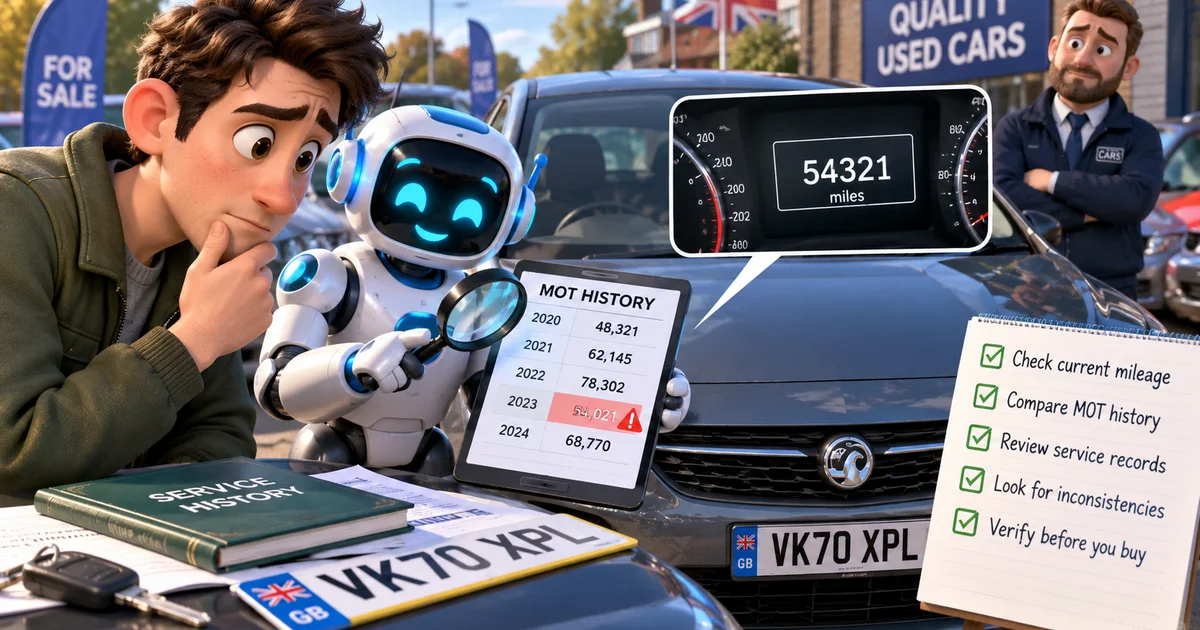
The most important thing to look at is not the latest reading. It is the progression across every test. MOT mileage is recorded by the test station from whatever the odometer shows at the time, and it is not independently verified. A car clocked before its test will simply produce a fraudulent figure that looks normal on its own. Only the sequence across several years exposes it.
Read the timeline for two patterns:
- A drop between tests. If a later MOT records fewer miles than an earlier one, that is the clearest sign of clocking. There is no innocent explanation for an odometer going backwards.
- An implausible jump. A very large increase over a short period can indicate a car used far harder than the seller suggests, or a reading altered at some point.
As a rough benchmark, the UK average is around 7,400 miles per year. Treat it as context, not a rule, since genuine drivers vary widely. A car averaging 4,000 miles a year is not automatically suspect, but it deserves a closer look at the service records.
If the timeline already shows a drop, stop there and skip the viewing. It is also worth confirming the car's tax position through a tax check before travelling.
Stage 2: Mileage Checks Before You Buy — During the Viewing and Test Drive
Online records tell you what the odometer read at test time. They cannot tell you whether the car's physical condition matches those numbers. That is the job of the viewing.
Check the dashboard reading first and note it down. Then compare it against the most recent MOT figure from the history you pulled earlier. A small increase since that test is expected. A reading lower than the last recorded MOT figure is a serious problem and should be raised immediately.
Then look at the wear items that accumulate with use:
- Driver's seat bolster. The side nearest the door takes the brunt of getting in and out. Heavy collapse or worn fabric on a car claiming low mileage is a mismatch worth questioning.
- Steering wheel. Shiny, smoothed leather or worn patches at the ten and two positions build up over tens of thousands of miles.
- Pedal rubbers. Worn or replaced pedals on a low-mileage car are another inconsistency.
None of these prove clocking alone, and a well-used car can still be a good buy. The point is whether the wear roughly matches the claimed mileage. If it clearly does not, ask the seller to explain before going further.
Stage 3: Final Mileage Verification — After You Find a Car You Are Serious About
Before committing, cross-reference the service history and any invoices against the MOT mileage timeline. Service stamps and garage invoices usually record mileage at the time of work, giving you a second, independent sequence to compare with the MOT figures. Where the two agree, you have reasonable confidence in the reading.
Where they disagree, or where the service history is missing entirely, treat that as unresolved. You have two sensible options: walk away, or put the discrepancy to the seller directly and see whether the explanation holds up. A vague answer, a claim that paperwork was lost, or a story about a replacement instrument cluster should all be weighed carefully. If the seller cannot account for a mileage drop, the safest course is to leave the car.
Clocking is illegal under the Consumer Protection from Unfair Trading Regulations 2008 and the Fraud Act 2006. A seller who misrepresents mileage is committing an offence, so there is no obligation to be polite about walking away.
What About Cars Under Three Years Old?
This method does not work on very new cars. Vehicles under three years old have no MOT history yet, so there is no official mileage timeline to inspect. The fallback is the service history and dealer invoices, which should show mileage at each visit. On a nearly new car, a main dealer record is the strongest evidence available. You can also use the site's vehicle tools for related checks, and an MOT history check once the car is old enough to have a test record.
The most reliable free source for mileage data is the official MOT history checker on GOV.UK, which shows the recorded mileage at every MOT test going back to 2005.
Frequently Asked Questions
How can I check a car's mileage for free before viewing it?
Start with the registration number and pull the MOT mileage timeline using a free mileage check, or look it up directly through the DVSA MOT history service. Both are keyed to the registration plate, so no paperwork from the seller is needed. Doing this online work first costs nothing and can save a wasted journey.
Why is the progression of MOT mileage more important than the latest reading?
MOT mileage is recorded by the test station from whatever the odometer shows at the time, and it is not independently verified. A car clocked before its test will simply produce a fraudulent figure that looks normal on its own. Only the sequence across several years exposes it.
What patterns in an MOT mileage timeline should I look for?
Read the timeline for two patterns. A drop between tests, where a later MOT records fewer miles than an earlier one, is the clearest sign of clocking, as there is no innocent explanation for an odometer going backwards. An implausible jump over a short period can indicate harder use or an altered reading.
What is the UK average annual mileage, and should I treat it as a rule?
As a rough benchmark, the UK average is around 7,400 miles per year. Treat it as context, not a rule, since genuine drivers vary widely. A car averaging 4,000 miles a year is not automatically suspect, but it deserves a closer look at the service records.
How do I check a car's mileage for free against its physical condition at a viewing?
Online records cannot tell you whether the car's physical condition matches those numbers. Check the dashboard reading first and note it down, then compare it against the most recent MOT figure. A small increase since that test is expected, but a reading lower than the last recorded MOT figure is a serious problem.
Which wear items can indicate a car's mileage does not match its condition?
Look at the driver's seat bolster, which takes the brunt of getting in and out, the steering wheel, where shiny or worn patches build up over tens of thousands of miles, and the pedal rubbers. None of these prove clocking alone, but they show whether wear roughly matches the claimed mileage.
What should I do after finding a car I am serious about buying?
Before committing, cross-reference the service history and any invoices against the MOT mileage timeline. Service stamps and garage invoices usually record mileage at the time of work, so they can be checked against the recorded MOT figures to confirm the odometer readings are consistent.
Ready to Check a Vehicle?
Get instant access to MOT history, tax status, and comprehensive vehicle information
Check a Vehicle Now