Buying a Used Car Checklist UK: What to Check Before You Buy
Free online checks to run before you view any car
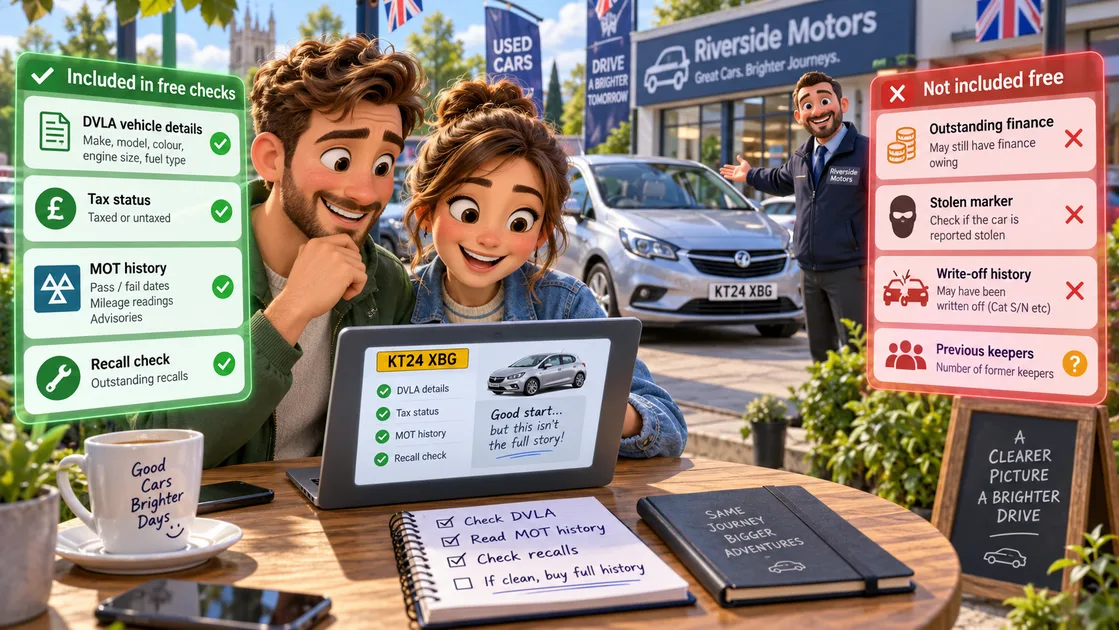
Before travelling to see a car, run the free checks that need only the registration number. Start with the DVLA Vehicle Enquiry Service, which confirms make, model, year of manufacture, engine size, fuel type, colour, MOT expiry date, tax status and whether a SORN is in force. A free car check of this kind takes a minute and can rule out a viewing before you leave the house.
Next, use the DVSA MOT history service. It is free and shows the mileage recorded at every MOT test since digital records began around 2005, along with pass and fail results and any advisory items. A mileage drop between tests is a clocking indicator, so an MOT history check doubles as a basic mileage check. Then use the gov.uk vehicle recall checker to see whether a safety recall has been issued; recalls are repaired free of charge by the manufacturer. A safety recall check is quick and worth doing on any model with a known fault history.
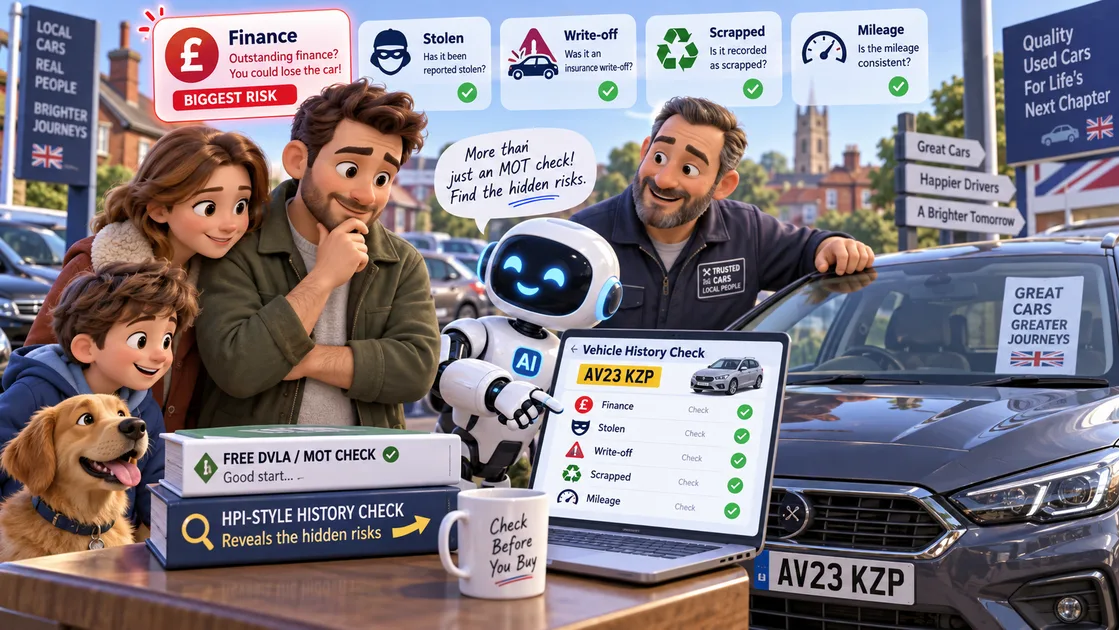
One thing the free DVLA service does not show is outstanding finance. If a car has HP or PCP finance outstanding, the finance company retains a legal interest in it, and a buyer who unknowingly purchases such a car can, in some circumstances, lose the vehicle to the finance company. Confirming finance status requires a paid history check. The same applies to theft markers and accident history, which is why a stolen vehicle check and a paid report sit alongside the free tools.
What to inspect physically on the day
Work around the car methodically rather than starting the engine first. Check bodywork in daylight for mismatched paint, uneven panel gaps and overspray, which can point to accident repairs. Look at tyre tread depth and wear patterns, and confirm all four tyres match in brand and size. Inside, check seat wear against the recorded mileage, test every electric item including windows, mirrors, air conditioning and infotainment, and look for damp smells or water marks under the carpets.
Under the bonnet, check oil and coolant levels and look for leaks or fresh sealant. Start the engine from cold if possible and listen for rattles. Ask for the service history folder and confirm the stamps or invoices match the mileage shown on the MOT record. This is where a free car history check plus the paperwork gives a fuller picture than either alone.
What the V5C must show, and forgery red flags
The V5C is the registered keeper document issued by DVLA. It is not proof of legal ownership. Every genuine V5C has a document reference number and a watermark. A paper-only V5C with no DVLA reference number is a forgery red flag. Check that the keeper details, registration number, make and model match the car in front of you, and be wary if the seller is not the named keeper or cannot explain why.
If the number of former keepers matters, a previous owners check helps confirm the history. For finance and theft data, understand what an HPI check shows before you rely on it.
Private seller versus dealer: your legal rights
Under the Consumer Rights Act 2015, buying from a dealer gives statutory rights covering satisfactory quality and fitness for purpose. Buying privately gives far fewer protections: the seller must describe the car accurately, but "sold as seen" limits recourse for hidden faults. A checklist for buying used car privately should therefore include more of your own verification, since you carry most of the risk.
When buying privately, ask why the car is being sold, how long the seller has owned it, whether it has been in an accident and whether any finance is outstanding. Get answers in writing where possible. If a car is reported stolen, see how to check if a car has been stolen before parting with money.
Quick checklist before handing over money
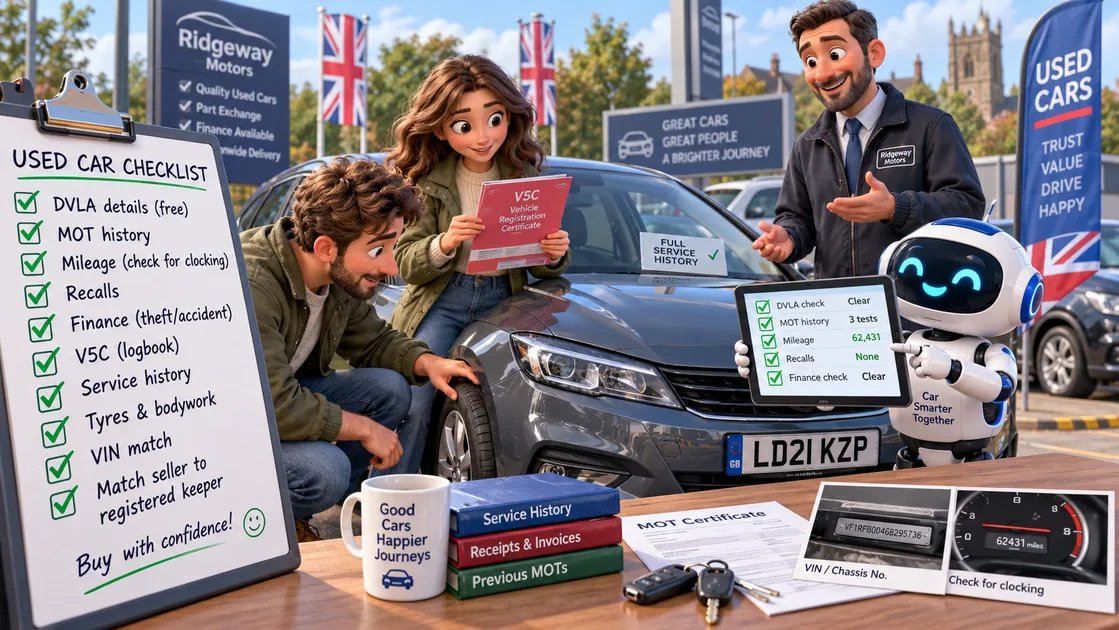
- Run the free DVLA check for tax, MOT and SORN status.
- Review the full MOT history and mileage record.
- Check for outstanding safety recalls.
- Order a paid history check for finance, theft and accident data.
- Inspect bodywork, tyres, interior, electrics and engine from cold.
- Verify the V5C reference number and watermark.
- Confirm the service history matches the recorded mileage.
- Match the seller to the registered keeper.
- Agree the price and payment method in writing.
After purchase, update the V5C with DVLA, tax the car if needed and arrange insurance before driving. Following this buying a used car guide UK buyers can rely on reduces the chance of an expensive surprise later.
How to Check for Clocking Before You Buy
Clocking — winding back the odometer to show a falsely low mileage — is illegal under the Road Traffic Act 1988, yet it still happens. The simplest defence is to check the free DVSA MOT history at gov.uk/check-mot-history. Every MOT test records the mileage at the time of the test. If the mileage drops between two tests, the car has been clocked. Also compare the recorded mileage against the wear on the pedal rubbers, driver's seat bolster and steering wheel — a car with genuinely low miles should show minimal wear on all three.
What Documents to Check When Buying a Used Car
The most important document is the V5C registration certificate (log book). Check the registered keeper name and address match the seller, and that the VIN on the V5C matches the VIN stamped into the car's chassis and visible at the base of the windscreen. Ask for the MOT certificate, a full service history and any warranty documents. If the seller cannot produce a V5C, do not hand over money — contact DVLA to verify the keeper details first.
Ready to Check a Vehicle?
Get instant access to MOT history, tax status, and comprehensive vehicle information
Check a Vehicle Now