Sold My Car DVLA Guide: How to Notify and Claim Your Tax Refund
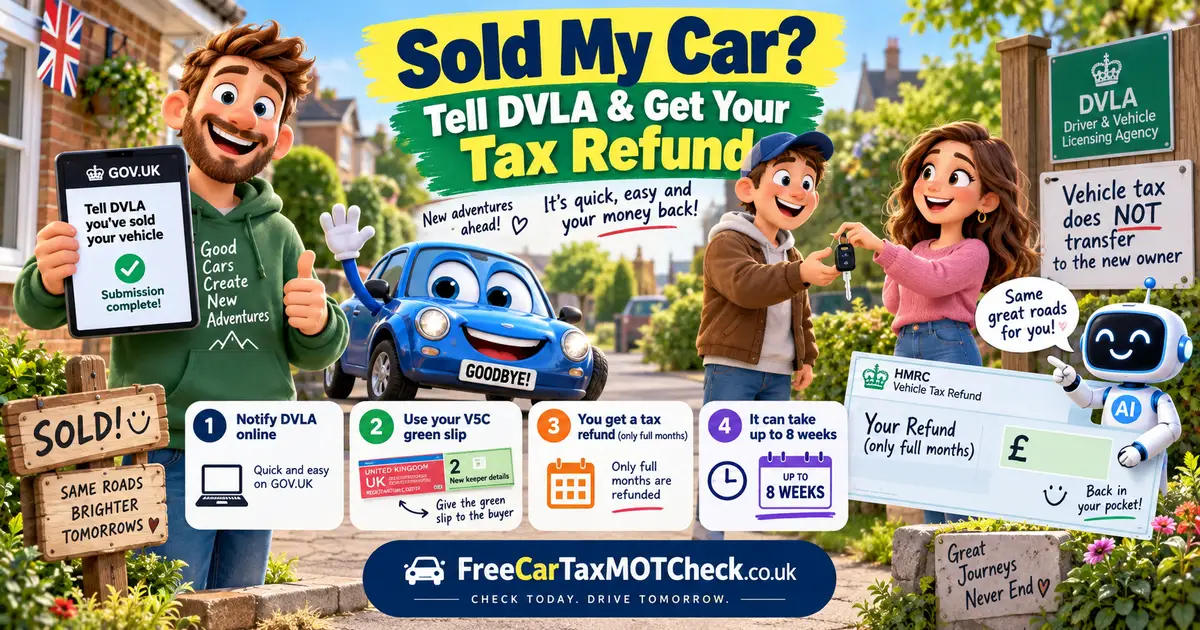
If you have sold my car DVLA rules require you to tell the agency straight away, and doing so also triggers a car tax refund for any full months left on the policy. This guide explains how to notify DVLA, how the refund is worked out, and what to do if the log book has already gone to the buyer.
What happens to road tax when you sell a car?
Road tax, formally known as vehicle excise duty, does not transfer to the new owner. When a vehicle changes hands, the tax on it ends. The new keeper must tax the vehicle in their own name before driving it, and driving without valid tax is an offence. Anyone who wants to understand the wider risks can read about the penalties for driving without tax.
Because the tax does not carry over, the seller must inform DVLA as soon as the sale or transfer is complete. Notifying DVLA does two things at once: it records the change of keeper and it acts to cancel road tax on the vehicle from that point. The cancellation is what generates a car tax refund for the remaining full months. There is no way to pass the unused tax to the buyer, and no way to keep it running for the buyer's benefit.
It is worth checking the tax position before a sale so there are no surprises. A DVLA vehicle check confirms the current tax status, and the guide on check if a car is taxed explains what the results mean.
Sold My Car DVLA: How to Notify Online (Step by Step)
The quickest way to notify DVLA sold car details is online at gov.uk/sold-bought-vehicle. The process is short and can be completed in a few minutes.
- Go to gov.uk/sold-bought-vehicle and choose the option to tell DVLA you have sold or transferred the vehicle.
- Enter the 11-digit reference number from the green slip, which is section 9 of the V5C log book.
- If the main V5C has already been handed to the buyer, use the reference number on the V5C/2 new keeper slip instead.
- Confirm the details and submit the notification.
When the notification is submitted online, the vehicle tax is cancelled automatically and the refund process begins. There is no separate application to make. The seller should keep a note of the date the notification was made, along with the date of sale, in case any query arises later.
Your road tax refund: how it is calculated
A road tax refund covers only full calendar months remaining on the tax. Partial months are not refunded. This is the single most important point to understand, because it explains why the amount received is often lower than expected.
Take a sale on 15 March with tax running until 31 August. The refund covers April, May, June, July and August, which is five full months. March is not refunded because the vehicle was only taxed for part of that month.
The refund is issued as a cheque made out to the name and address held on record in the V5C log book. It is not paid into a bank account. If the keeper has moved since the V5C was issued, the cheque will go to the old address, so it is sensible to update the log book details before selling.
Where the tax is paid by Direct Debit, DVLA cancels the Direct Debit automatically when the sale is notified. There is no need to contact the bank to stop it.
How long does a car tax refund take?
The question of car tax refund how long it takes has a straightforward answer: allow up to 8 weeks for the cheque to arrive. If it has not arrived after 8 weeks, contact DVLA directly to chase it.
There is no bank-transfer option. The car tax refund cheque is the only method used, which means the seller needs to be at the address recorded on the V5C to receive and bank it. Anyone who has moved house without updating the log book should act on that before the sale completes.
Timing also matters for the buyer. A new keeper cannot legally drive the vehicle until it is taxed in their name, so the sale and the new tax arrangement usually need to line up on the same day. The article on when car tax is due covers renewal dates in more detail.
What if you do not have the V5C log book?
If the V5C has already been passed to the buyer and no reference number is available, the sale cannot be notified online. In that case, write to DVLA, Swansea, SA99 1BA.
The letter should include the seller's full name and address, the vehicle registration number, the make and model, the date of sale, and the new keeper's full name and address. Keeping a written record of the sale date is essential, both for the letter and for any later query about the refund.
It is also worth noting the difference between selling and keeping a vehicle off the road. If the vehicle is not being sold but is being kept off the road, a SORN declaration is made instead. The guide on what SORN means explains how that works.
Frequently asked questions
Is a car tax refund automatic?
Yes. When the sale is notified to DVLA online, the tax is cancelled automatically and the refund is triggered at the same time. No separate claim form is needed.
How long does a car tax refund take?
Allow up to 8 weeks for the cheque to arrive. If it has not arrived by then, contact DVLA.
What if I haven't received my car tax refund cheque after 8 weeks?
Contact DVLA to report that the car tax refund has not been received. Have the sale date and vehicle details to hand when making contact.
Does road tax transfer to the new owner when I sell my car?
No. Vehicle excise duty does not transfer. The new keeper must tax the vehicle themselves before driving it.
Can I get a car tax refund without a V5C log book?
Yes, but not online. Write to DVLA at Swansea, SA99 1BA with the vehicle registration, make and model, date of sale, and the new keeper's name and address.
What happens to my Direct Debit for car tax when I sell my car?
DVLA cancels the Direct Debit automatically when the sale is notified. There is no need to cancel it with the bank.
Do I need to cancel my car tax if I sell privately?
No separate cancellation is required. Notifying DVLA of the sale cancels the tax automatically, whether the sale is private or to a dealer. A run a free car check before selling can help confirm the vehicle's details are correct.
Frequently Asked Questions
Ready to Check a Vehicle?
Get instant access to MOT history, tax status, and comprehensive vehicle information
Check a Vehicle Now