UK Tyre Tread Depth Law: Legal Minimum, MOT Rules and Fines
UK Tyre Tread Depth Law: The 1.6mm Legal Minimum
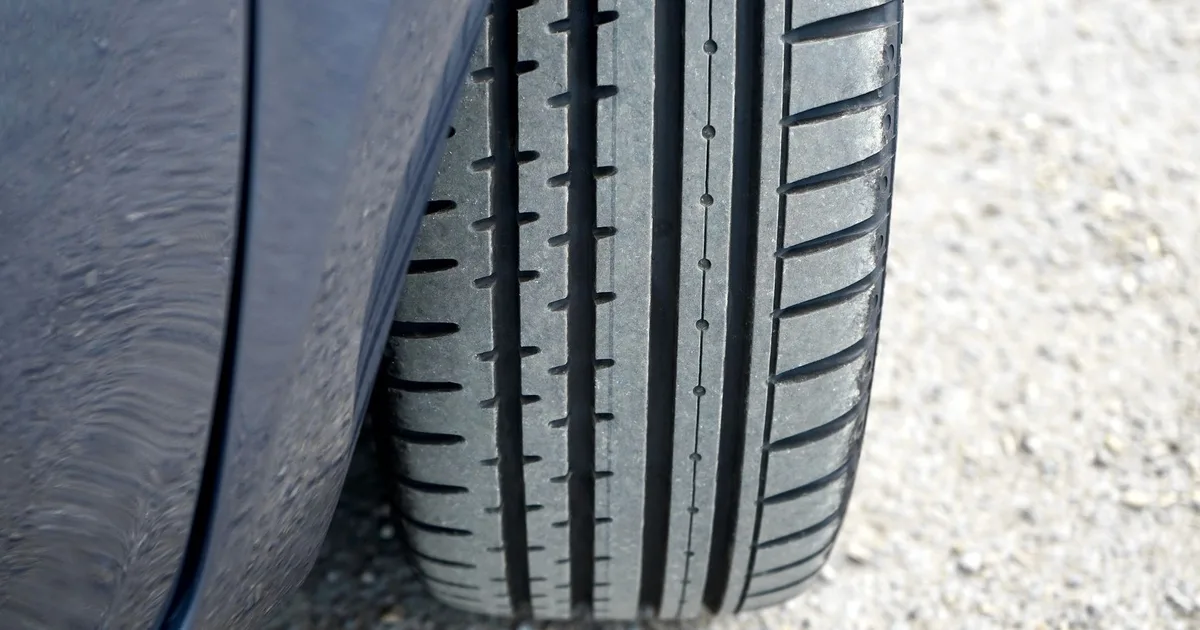
The minimum legal tyre tread depth in the UK is 1.6mm, measured across the central three-quarters of the tread breadth and around the entire outer circumference of the tyre. This figure sits at the heart of UK tyre tread depth law and is set out in the Road Vehicles (Construction and Use) Regulations 1986, regulation 27. It applies to cars, light vans and light trailers, and it is an absolute floor rather than a target.
The measurement zone matters. The rule is not assessed across the full width of the tyre, nor at a single point. It covers the central three-quarters of the tread breadth, checked all the way around the outer circumference. A tyre that is worn below 1.6mm anywhere in that zone is illegal, even if other parts of the tread look healthy.
Driving on a tyre that falls below the limit is a criminal offence. It is not a maintenance oversight that can be corrected later without consequence; it is an endorseable offence that can lead to a fine, penalty points and insurance complications. The legal threshold is deliberately low, which is why motoring organisations treat it as a last warning rather than a sensible replacement point.
Legal Tyre Tread Depth for All Vehicle Types
The legal tyre tread depth requirement is not identical across every vehicle class, although the 1.6mm figure is the one most drivers recognise. The table below sets out the position for each category.
| Vehicle type | Minimum requirement |
|---|---|
| Cars, light vans and light trailers | 1.6mm across the central three-quarters of the tread breadth, around the entire circumference |
| Motorcycles over 50cc | 1mm across the full width of the principal grooves, with the original tread pattern visible across the remaining three-quarters of the tyre width |
| Motorcycles up to 50cc | Original tread pattern must be clearly visible |
| Lorries, buses and coaches | 1mm across the full width of the principal grooves, with the original tread pattern visible across the remaining three-quarters of the tyre width |
Motorcycle tyre tread depth follows the 1mm rule for machines over 50cc, with the visible-pattern requirement for smaller machines. The 1.6mm standard is the most widely known because it covers the overwhelming majority of UK drivers, including every ordinary car and light van on the road.
How to Use the 20p Tyre Test
The 20p tyre test is a quick informal check that any driver can carry out at the roadside. The outer band of a 20p coin is approximately 2mm wide, which makes the coin a useful rough gauge for tread that is getting close to the limit.
- Insert the 20p coin into one of the main tread grooves in the central part of the tyre.
- Look at the outer band of the coin. If the band is visible and not hidden inside the groove, the tread may be at or approaching the legal minimum.
- Repeat in several grooves around the tyre and across the tread width, since wear is rarely even.
A visible outer band suggests the tread is likely below 3mm, which is the threshold at which the AA, RAC and TyreSafe recommend replacement. The coin method is a warning indicator only. It does not replace a proper measurement, and it cannot tell you the exact depth.
A calibrated tread depth gauge gives a reliable reading. The probe is inserted into the groove in the central part of the tyre and the measurement is read directly. Gauges cost only a few pounds from motor factors or online retailers, and they remove the guesswork from a check that has legal consequences.
Tyre MOT Rules: What the Examiner Checks
The tyre MOT rules are straightforward on depth: if tread is below 1.6mm anywhere in the central three-quarters of the tread breadth, the tyre fails and the vehicle fails its test. The examiner is not looking for a comfortable margin, only whether the legal floor has been breached.
Depth is not the only criterion. A tyre also fails if it has a cut or tear deep enough to expose the ply or cord, a bulge or lump on the sidewall or tread, a radial-ply tyre fitted on the same axle as a cross-ply tyre, or a tyre that is not the correct size or load and speed rating for the vehicle. Damage that could affect safe operation is treated in the same way.
Where wear is approaching the limit, or there is minor surface cracking or slight uneven wear that has not yet reached the failure threshold, the tester may record an advisory note instead. These notes are worth reading, because they flag a tyre that will need attention before the next test. You can check your vehicle's MOT history to see advisory notes recorded at past tests, including tyre wear. The GOV.UK Highway Code Annex 6 on tyre safety sets out the official maintenance guidance behind these checks.
What Does a Tyre MOT Failure Look Like?
A tyre MOT failure appears on the test record as a specific defect, not a general comment. The notice will identify which tyre failed and why, whether that is depth below the limit, a cut exposing the cord, a bulge, a mismatched ply type on an axle, or an incorrect size or rating.
Tyre faults are among the most common reasons for MOT failures in the UK, so the record is a useful history to review before buying a used car. The MOT history record shows all past failures and advisories online, which means a pattern of tyre-related defects is visible to anyone who looks. Our guide to what MOT advisories mean explains how to read those notes.
If the current MOT is still valid, the car can be driven to have the tyre repaired or replaced. If the MOT has expired, the vehicle cannot be driven on public roads, even to a garage, without risking further penalties.
New Tyre Tread Depth UK: When to Replace
New tyre tread depth UK drivers can expect from a fresh car tyre is typically between 7mm and 8mm. That starting figure explains why the legal minimum is so far down the scale: most of the useful life of a tyre is spent above 3mm, and the final millimetres are where wet-weather performance falls away sharply.
The AA, RAC and TyreSafe all recommend replacing tyres before tread reaches 3mm, well ahead of the legal floor. The reason is stopping distance. In a standard test, a car travelling at 50mph on a wet road can take around 44 metres longer to stop on 1.6mm tread than on 3mm tread. That is roughly the length of several cars, and it is the difference between stopping in time and not.
Check tread in multiple positions around each tyre and across the width. Uneven wear across the tread can point to wheel alignment or suspension problems, which will wear a new tyre out prematurely if they are not corrected. Check all four tyres, and the spare if the vehicle has one, since a spare must be roadworthy if it is fitted and driven on.
UK Tyre Fines: What You Risk Driving on Illegal Tyres
Driving on a tyre with insufficient tread is an endorseable offence. The penalty is up to £2,500 in fines and 3 penalty points per illegal tyre. Police and DVSA enforcement officers can issue a Fixed Penalty Notice or refer the matter to court.
The worst case adds up quickly. A vehicle with four illegal tyres could attract fines of up to £10,000 and 12 penalty points. Twelve points is above the threshold at which a court must consider disqualification, so a single set of worn tyres can put a licence at risk.
There is a further consequence that many drivers do not consider: driving on illegal tyres can invalidate car insurance in the event of an accident, even where the driver was not at fault for the collision itself. Our guide to fines for driving without a valid MOT covers the wider penalty picture, and you can run a free car check before buying a used vehicle.
Checking tread takes two minutes and a 20p coin. Regular checks cost nothing and can prevent a situation that is both dangerous and expensive.
For more guides on tyre safety, MOT rules and keeping your vehicle roadworthy, visit our UK driving law guides section.
Frequently Asked Questions
What is the legal tyre tread depth in the UK?
For cars, light vans and light trailers it is 1.6mm across the central three-quarters of the tread breadth, around the entire circumference. Motorcycles over 50cc and large vehicles have a 1mm requirement with the original tread pattern visible across the remaining width.
How do I use the 20p tyre test?
Insert a 20p coin into a main tread groove in the central part of the tyre. If the outer band of the coin is visible rather than hidden inside the groove, the tread may be at or approaching the legal minimum and should be measured properly with a gauge.
Will I fail my MOT for low tyre tread?
Yes, if tread is below 1.6mm anywhere in the central three-quarters of the tread breadth. Wear that is approaching the limit but has not yet breached it may be recorded as an advisory instead.
How deep should new tyres be?
New car tyres typically start with between 7mm and 8mm of tread. Replacement is recommended at 3mm, well before the legal minimum is reached.
Can I drive with 2mm tyre tread?
Legally, yes, provided the depth stays above 1.6mm across the measured zone. However, 2mm is below the 3mm replacement threshold recommended by the AA, RAC and TyreSafe, and wet-weather stopping distances are significantly longer.
What is the fine for driving on bald tyres in the UK?
Up to £2,500 and 3 penalty points per illegal tyre. Four illegal tyres could mean fines of up to £10,000 and 12 penalty points, at which point a court must consider disqualification.
How often should I check my tyre tread depth?
Check at least once a month and before any long journey, along with tyre pressures. Use a gauge for accuracy and inspect all four tyres plus the spare, looking for uneven wear as well as depth.
Frequently Asked Questions
Ready to Check a Vehicle?
Get instant access to MOT history, tax status, and comprehensive vehicle information
Check a Vehicle Now