How to Repair Flood Damaged Cars in the UK: 2026 Cost Guide
Can You Repair Flood Damaged Cars? What Determines the Outcome
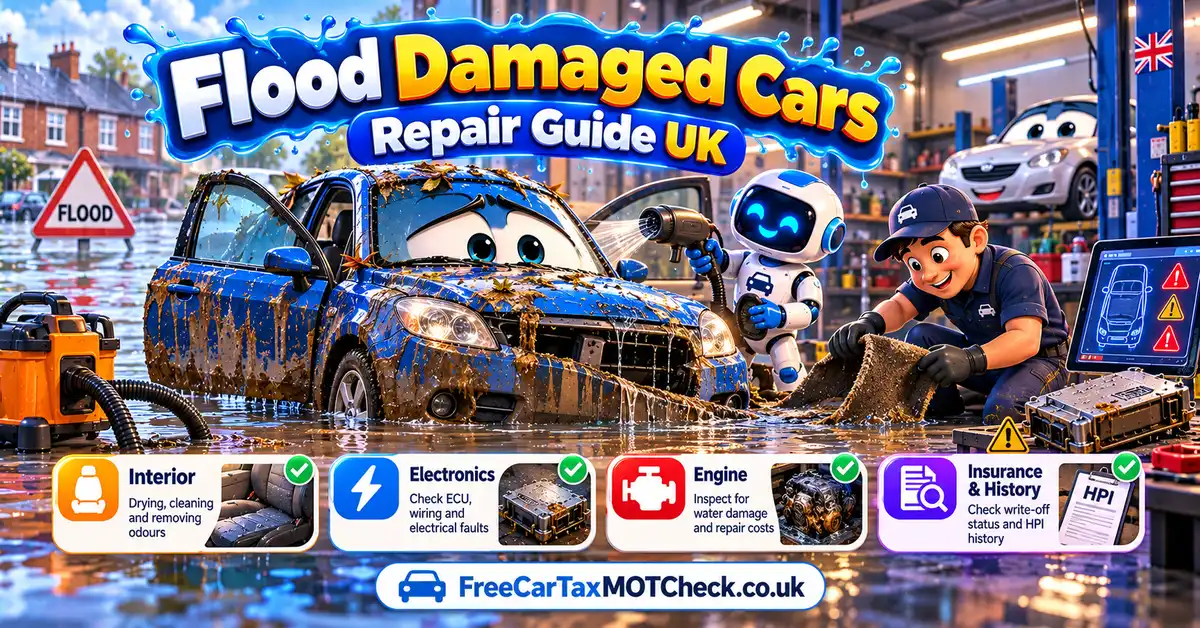
Whether you can repair flood damaged cars depends on three factors: how deep the water was, how long the vehicle was submerged and which systems were affected. There is no single answer that applies to every vehicle, because a car that sat in a few centimetres of water for a minute is a very different proposition from one that was parked in a flooded garage overnight.
In practice, insurers and assessors group flood damage into three broad bands:
- Minor: the car was briefly driven through shallow standing water, the engine stayed off or was not affected, and the carpets may be wet but water did not rise above sill level. These cases are often repairable.
- Moderate: water reached or exceeded the door sills with the engine switched off. Repairs may be possible, but they require a full electrical inspection and an interior strip-out.
- Severe: the engine was running during submersion, or the vehicle sat in water above dashboard level for an extended period. Hydrolocked engines, saturated control units and corroded wiring throughout the car usually make repair uneconomical.
Where an insurer is involved, flood-damaged vehicles are most commonly recorded as Category S or Category N write-offs, depending on whether the water caused structural damage to the chassis or body. That marker matters later, both for resale value and for insurance quotes.
Common Problems with Flooded Cars
The common problems with flooded cars rarely stop at a damp carpet. Water reaches places owners do not expect, and much of the damage appears weeks or months after the event rather than on the day itself. The main issues are:
- Hydrolocked engine: water drawn into the air intake and combustion chambers while the engine is running. Because water cannot be compressed, it can bend or break connecting rods. A hydrolocked engine often cannot be repaired economically and needs full replacement.
- Electrical and ECU damage: the engine control unit and wiring looms are highly vulnerable. Corrosion on connectors develops weeks or months later, causing intermittent faults that are expensive to trace.
- Interior mould and odour: carpet underlay, seat foam and door trims absorb water, and mould growth begins within 24 to 48 hours in warm conditions. Professional deodourising and a full interior strip-out is often required.
- Brake and suspension corrosion: disc rotors, callipers and suspension components corrode rapidly after submersion. Seized callipers are a common MOT failure.
- Contaminated oil and transmission fluid: water in engine oil looks milky or grey-white. Gearbox and differential fluid contamination can lead to bearing failure.
- Air conditioning system: the pollen filter and evaporator can harbour mould, spreading spores through the cabin whenever the blower runs.
Will a Flooded Engine Fix Itself?
The short answer to will a flooded engine fix itself is no. A hydrolocked engine will not recover on its own, and no amount of time or drying will undo mechanical damage inside the cylinders.
If the engine was running when it ingested water, internal damage is almost certain and the unit requires mechanical inspection and repair or replacement. If the engine was not running and water entered only through submersion while the car was stationary, and the water was removed quickly, the damage may be limited to seals, electronics and the air filter. Even then, the vehicle must be professionally assessed before it is driven again.
Drying out alone is never sufficient. Corrosion in wiring, sensors and the ECU can continue to develop for months after the car appears dry, which is why electrical faults often surface long after the flood event itself.
Is a Flood-Damaged Car Repairable?
The question of is flood damage car repairable sits on a spectrum rather than a simple yes or no. Minor cases, such as a car briefly driven through shallow standing water with wet carpets but no submersion above sill level, are often repairable at modest cost. Moderate cases, where water reached the sills with the engine off, may be repairable but demand a full electrical inspection and interior strip-out before anyone can be confident.
Severe cases are different. When the engine was running during submersion, or the vehicle sat in water above dashboard level, repair costs frequently exceed the car's value. A hydrolocked engine, a saturated ECU and corroded wiring across the whole vehicle add up quickly, and at that point replacement is usually the more sensible route. Where a vehicle is beyond economic repair, the GOV.UK guide to scrapping a vehicle explains the correct process for disposing of it properly.
Flood Damaged Cars Repair Cost UK
Any flood damaged cars repair cost figure is an estimate, because the final bill depends heavily on the make, model, engine type and how far the water reached. The ranges below reflect typical UK costs in 2026 and are useful for budgeting, not for quoting.
| Repair type | Typical cost range |
|---|---|
| Interior dry-out and professional cleaning | £300–£800 |
| ECU replacement | £500–£1,500 (depending on make and model) |
| Wiring loom repair or replacement | £1,000–£3,000+ |
| Engine replacement (hydrolocked, severe) | £2,000–£6,000+ (depending on engine type) |
| Full flood repair (moderate damage, no engine or structural damage) | £1,500–£5,000 |
Actual costs vary significantly, so always obtain written quotes from approved repairers before committing to any work. A quote in writing also gives you a record if the repair is later disputed.
What Category Is a Flood Damaged Car?
To understand what category is a flood damaged car, start with the Association of British Insurers system. Flood-damaged vehicles processed through an insurer are most commonly recorded as Category S or Category N. Category S (formerly Category C, changed in October 2017) means structurally damaged but repairable, and the car must be inspected and registered with DVLA before returning to the road. Category N (formerly Category D) covers non-structural damage only, such as electrics, trim and mechanical parts, and the vehicle can return to the road once repaired.
For completeness, Category A vehicles must be crushed with no parts sold or used, and Category B vehicles have the body shell crushed, though salvageable parts can be removed first. Neither can return to the road.
Two points are often misunderstood. First, a write-off marker stays on the vehicle's history record permanently and appears in any HPI check or vehicle history report. Second, not every flood-damaged car carries a marker: only those reported to an insurer and written off are recorded. A car repaired privately without a claim may have no marker at all, and physical inspection is the only way to detect it. DVLA has no dedicated flood damage flag on the V5C, which records keeper changes and registration details only.
Before buying, run a free car history check to see outstanding finance, previous write-off markers and MOT history in one place.
For a full explanation of what Cat S and Cat N markers mean for insurance, resale value and roadworthiness, read the guide to buying a Cat S or Cat N car in the UK.
How to Spot Flood Damage Before Buying a Used Car
Because records are incomplete, a careful physical inspection is essential. Work through the following checks before agreeing to any sale:
- Smell the interior. A musty or mouldy odour is a strong indicator.
- Check under the carpets and the boot carpet for watermarks, staining or dampness.
- Inspect the seat rails and the underside of the seats for rust or water staining.
- Check the door hinges and sill plates for rust streaks left by draining water.
- Look at the wiring connectors in the engine bay for white residue or corrosion marks.
- Check the spare wheel well for standing water or rust.
- Inspect the headlights and tail lights for condensation or water marks inside the lens.
- Check the air filter housing for silt or debris.
- Start the engine. A rough idle, smoke or unusual noises may indicate damage.
- Review the full MOT history. Advisories for corrosion or brake issues on a relatively young vehicle can signal a flood-damaged past.
Sellers have legal obligations here. A private seller must disclose known material faults, and failing to disclose known flood damage could constitute misrepresentation. A Cat S or Cat N write-off must also be disclosed in any sale, since the marker is permanent and visible on any history check.
Use the free tools on this site to check the car's MOT history and check if the car is currently taxed before you travel to view it. If the paperwork is missing, the seller can replace a lost V5C logbook using form V62.
For a complete pre-purchase inspection framework covering mechanical, electrical and paperwork checks, see the used car buying checklist.
Frequently Asked Questions
Can a hydrolocked engine be fixed?
In some cases it can be rebuilt, but the damage is often severe enough that replacement is the more economic option. Bent or broken connecting rods mean major internal work, and a hydrolocked unit frequently cannot be repaired economically. A qualified mechanic should assess the engine before any decision is made.
Will insurance cover flood damage to my car?
Coverage depends on the policy and how the damage occurred. Comprehensive policies commonly include flood damage, while third-party cover does not cover damage to your own vehicle. Policyholders should check their terms and report the incident promptly.
How can I tell if a used car has been flood damaged?
Combine a history check with a physical inspection. Look for musty smells, watermarks under carpets, rust on seat rails and door hinges, corrosion on wiring connectors, condensation inside light lenses and silt in the air filter housing. A history report will reveal any recorded write-off marker.
Does flood damage show on a V5C or car history check?
The V5C does not record flood damage, as there is no dedicated flag on the logbook or the public register. A write-off marker will appear on a history check if the vehicle was reported to an insurer and written off, but a privately repaired car may show nothing at all.
Is it worth buying a flood-damaged car?
Only with full knowledge of the damage and a realistic repair budget. Minor cases with documented repairs can represent value, but severe cases carry a high risk of ongoing electrical faults and resale difficulty. A Cat S or N marker also affects insurance premiums and future value.
What should I do immediately after driving through a flood?
Stop in a safe place and do not restart the engine if it stalled in water. Have the vehicle inspected professionally before driving further, and check the air filter housing and fluids for signs of water ingress. Prompt assessment limits the chance of secondary corrosion damage.
How long does it take to repair a flood-damaged car?
Timelines vary with severity. Interior drying and cleaning may take days, while electrical diagnosis, loom repairs or engine replacement can take weeks, particularly when parts are on back order. A written quote from an approved repairer should include an estimated completion date.
Frequently Asked Questions
Ready to Check a Vehicle?
Get instant access to MOT history, tax status, and comprehensive vehicle information
Check a Vehicle Now