Penalty for Driving Without Insurance UK: Fines & Points
What Is the Penalty for Driving Without Insurance UK?
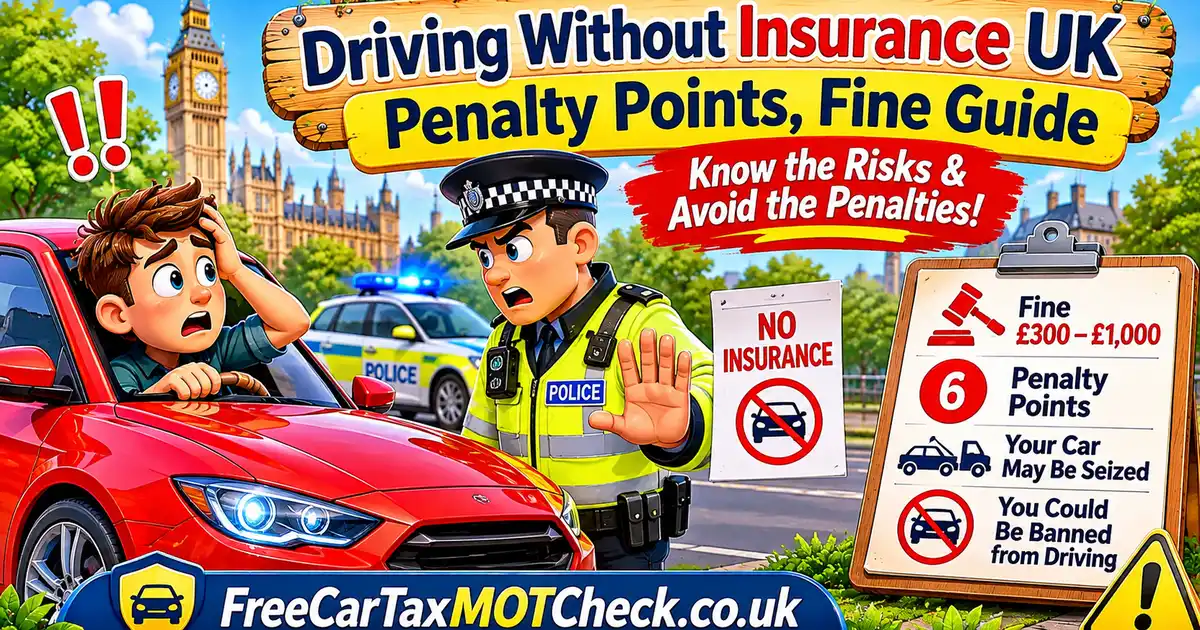
The penalty for driving without insurance UK starts with a £300 fixed penalty and 6 points at the roadside, but if the case goes to court it can mean an unlimited fine and 6-8 points or disqualification. It depends on how you're caught, not just whether you were insured. If a police officer stops you and finds you're driving uninsured, that's dealt with at the roadside or through a fixed penalty. If the matter goes to court instead, the consequences are genuinely heavier. There's also a second, separate offence, for simply keeping an uninsured car parked, that carries its own different penalty entirely. Mixing these two up is the most common source of confusion on this topic.
What are the consequences of driving without insurance in the UK?
The standard roadside penalty for driving without insurance is a £300 fixed penalty fine plus 6 penalty points. If the case goes to court instead, you face an unlimited fine, 6 to 8 penalty points or disqualification.
The Roadside Fixed Penalty: £300 and 6 Points
If you're caught driving a vehicle you're not insured to drive, the police can issue a fixed penalty of £300 and 6 penalty points on the spot. This is the figure most people mean when they ask about this penalty, and it's confirmed directly on GOV.UK official vehicle insurance guidance. Those 6 points go on your licence the same as points from any other motoring offence, and if your total reaches 12 points within 3 years, you can be disqualified under the totting-up rules that apply to all driving offences, not just this one.
What Happens If It Goes to Court Instead?
A court case carries a heavier, officially uncapped exposure: GOV.UK states you could receive an unlimited fine and be disqualified from driving. The police also have the power to seize the vehicle, and in some cases destroy it, regardless of whether the case goes to court. There's no official confirmed cap, such as a specific £5,000 ceiling, for this offence in England and Wales; several commercial sites quote that figure, but it doesn't appear on any official government or Sentencing Council page checked for this guide, so it isn't repeated here as fact.
| Route | Fine | Points | Other consequences |
|---|---|---|---|
| Roadside fixed penalty | £300 | 6 | Vehicle can be seized |
| Court conviction | Unlimited | 6 to 8, or disqualification | Vehicle can be seized or destroyed |
Is There a Legal Defence? "Special Reasons" Explained
The Road Traffic Offenders Act 1988 allows a court to reduce or avoid a driving disqualification if there are "special reasons" connected to the specific circumstances of the offence. This is a narrow legal provision, not a general excuse, and it applies to the disqualification specifically rather than removing the fine or points outright. It is not a way to avoid the offence itself, and whether it applies depends entirely on the circumstances a court is asked to consider.
The Other Insurance Offence: Keeping an Uninsured Car
Separately from driving, if you're the registered keeper of a vehicle that isn't insured and hasn't been declared off the road with a SORN, you can be fined £100 automatically under Continuous Insurance Enforcement, even if the car was never driven. The vehicle can also be clamped, impounded or destroyed, and a court case for this specific offence carries a maximum fine of £1,000, confirmed at gov.uk/vehicle-insurance/uninsured-vehicles. No penalty points apply to this one, since it's a keeper obligation rather than a driving offence. The fix is simple: insure the vehicle, or SORN it if it's genuinely off the road.
How Are Uninsured Drivers Actually Caught?
Most uninsured drivers aren't caught by a traffic stop at all. ANPR (automatic number plate recognition) cameras check number plates against the Motor Insurance Database in real time as vehicles pass, and police also have a more detailed version of the database available through the Police National Computer. This means an uninsured vehicle is often flagged automatically within days, well before anyone is physically stopped.
Reporting a Vehicle You Believe Is Uninsured
If you genuinely believe a specific vehicle is being driven without insurance, the real route is to report it to the police, using the non-emergency 101 number, or your local force's own online reporting service for non-urgent matters. There is no separate DVLA or MIB self-service tool for the public to report a suspected uninsured vehicle directly; that's a common misconception. The DVLA does run its own reporting route for untaxed vehicles specifically, but that's a different system covering a different offence.
For the full picture on checking your own cover, see our guide on is my car insured, or run a free car check before buying or selling. For more guides like this, see our UK Driving Law section.
Frequently Asked Questions
Ready to Check a Vehicle?
Get instant access to MOT history, tax status, and comprehensive vehicle information
Check a Vehicle Now