How Much Is My Number Plate Worth? DVLA Auction, Cherished Value
How much is my number plate worth?
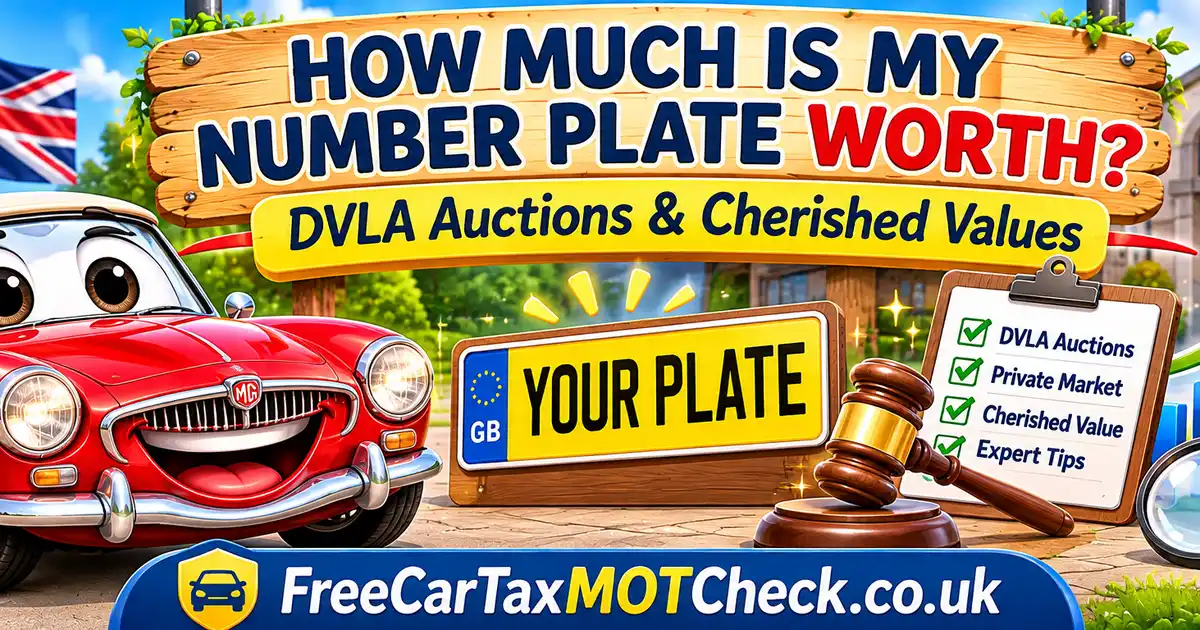
There's no fixed formula for valuing a private number plate — it's ultimately worth whatever a buyer is willing to pay, driven by how readable it is, how rare the combination is and how much demand there is for it. Standard DVLA-released plates typically start from around £250, while the rarest combinations have sold for far more, with the current UK record standing at £926,000.
How Much Is My Number Plate Worth? Why There's No Fixed Formula
The honest answer is: there's no official valuation formula. A number plate's value is simply whatever a buyer is willing to pay for it, and that depends on rarity, age, and how desirable the specific combination of letters and numbers is. A standard, randomly-assigned registration plate has no resale value at all, since it can't be transferred separately from the vehicle. Personalised or "cherished" plates are a different story entirely.
What Actually Drives a Number Plate's Value
A few real factors consistently push value up:
- Readability. Plates that spell out a name, word, or initials using numbers as letters (5 for S, 1 for I) are worth significantly more than a plate with no obvious meaning.
- Fewer characters. Shorter plates are rarer by definition, since far fewer short combinations exist, and rarity drives price.
- Low or repeating numbers. Single digits and repeating numbers (11, 777) carry a premium over random digit combinations.
- Historical or sentimental significance. A plate tied to a notable date, car, or previous owner can sell well above what its letters/numbers alone would suggest.
DVLA's own newly-released plates start from around £250, but genuinely rare combinations have sold for far more at auction, and it is scarcity, age and sheer desirability that really drive number plate value. The current UK record is '1 F', which sold for £926,000 at a Sotheby's auction on 1 November 2025. That sale broke the previous record held by 'JB 1', which fetched £608,600 at a Bonhams auction in July 2025 and had itself overtaken the long-standing record of '25 O' (£518,480 in 2014).
DVLA Number Plate Auctions: How They Actually Work
DVLA runs its own number plate auctions several times a year, now entirely online after moving away from in-person events. Each auction releases thousands of registrations, ranging from everyday combinations to genuinely rare ones, and you can browse what's available or register to be notified when a specific plate you want comes back up. Outside of auctions, DVLA also sells many personalised registrations directly through gov.uk/buy-a-personalised-registration-number at fixed "Buy Now" prices.
One important point that trips people up: DVLA will not buy a plate back from you. If you want to sell a plate you own, you have to do it privately, through a specialist dealer, or by putting it into a future DVLA auction yourself, not by returning it to DVLA directly.
DVLA Auctions, Private Resale, and Major Auction Houses
Number plates change hands through three quite different routes, which is the main reason prices vary so wildly. The first is the DVLA's own catalogue auctions, where the agency releases previously unissued registrations it holds itself — typically around 2,000 per sale. This is where the £250-ish starting prices appear and where the bulk of ordinary sales take place. The second route is private resale, either between individuals or through a specialist dealer, for a plate someone already owns.
The third route is the major fine-art and collectables auction houses such as Bonhams and Sotheby's, which handle the genuinely historic, record-breaking dateless plates — examples include '1 F' and 'JB 1'. These never pass through the DVLA's own auction at all. So while the DVLA sales account for most transactions and modest prices, the headline six-figure records come from private resale and the major auction houses.
What a Real DVLA Auction Actually Pays
According to analysis by Right Reg, a UK private number plate specialist, the July 2026 DVLA timed online auction offers a useful reality check for anyone weighing up a number plate value check. Of the 2,000 registrations offered, 1,974 sold — a sell-through rate of 98.7% — generating a total of £5,575,340. That works out at an average of £2,824 per registration, but the median was just £1,610, which tells you far more about what a typical buyer actually pays.
The gap between those two figures is the story. A small number of exceptional lots pull the average upwards, and the highest sale in the auction was a single plate, '97 O', at £90,010. Strip out the handful of headline results and the bulk of registrations change hands for modest, accessible sums.
The practical lesson is that most plates are well within reach of ordinary buyers rather than six-figure purchases. If you are valuing a registration, judge it against the median rather than the record-breakers, and treat the exceptional sales as outliers rather than a guide to what yours might fetch.
Private Plate Valuation: Getting a Realistic Number
A private plate valuation from an online tool gives a rough starting estimate, but treat it as a guide rather than a guarantee, since these tools can't fully account for current buyer demand on your exact combination. A specialist number plate dealer will usually give a more accurate read on private number plate value, since they track real recent sale prices for similar combinations, not just generic rules about rarity. Getting more than one valuation before you commit to selling is worth the extra few minutes.
Transferring or Assigning a Plate: The Real Cost
Once you've bought a plate, or want to put your existing one onto a different vehicle, DVLA charges a mandatory £80 assignment fee to transfer it. This is separate from whatever you paid to buy the plate itself. It's also worth knowing that at a DVLA auction, the hammer price isn't the full cost — buyers typically also pay a buyer's premium and VAT on the hammer price, on top of the £80 DVLA assignment fee, so the final cost can run noticeably higher than the headline winning bid. Before bidding, some buyers use a dvla number plate value calculator to sanity-check what a plate is really worth to them. For the full process, including retention if you're not ready to put the plate on a car yet, see our guide on DVLA number plate changes.
For the legal side of owning and displaying a private plate, rather than its value, see our guide on private number plate rules. For more guides like this, see our Buying Guides section, or run a number plate check on any UK registration.
Frequently Asked Questions
Ready to Check a Vehicle?
Get instant access to MOT history, tax status, and comprehensive vehicle information
Check a Vehicle Now