Electric Company Car Tax Explained: How BIK Works in 2026/27
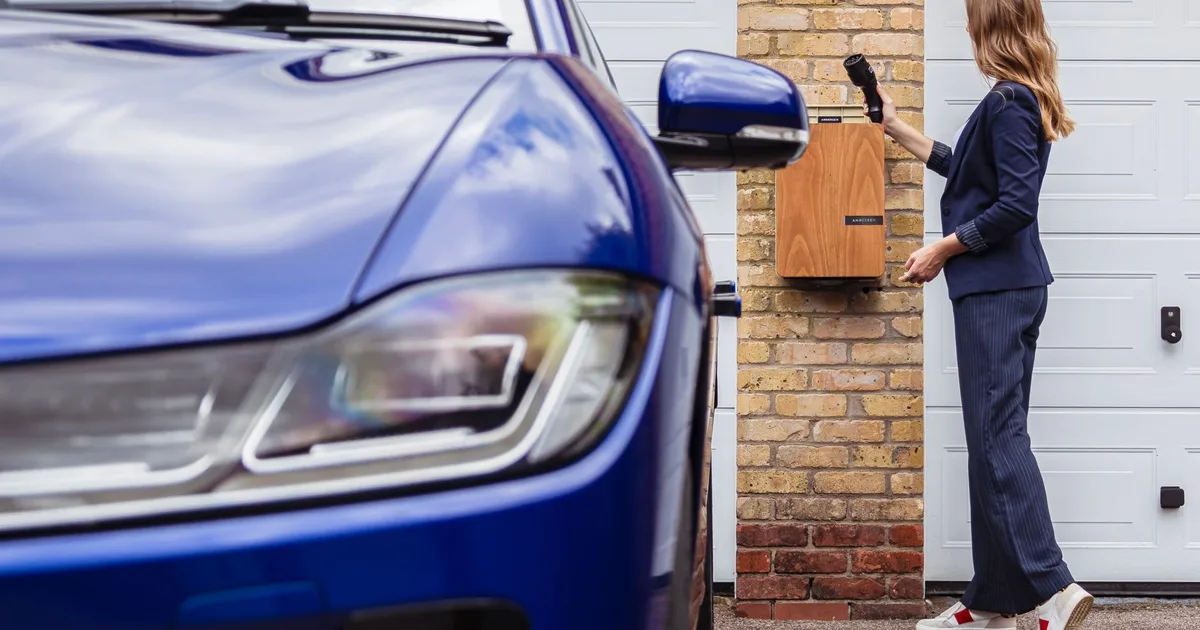
What is company car tax (benefit in kind)?
If an employer makes a car available to an employee for private use, including commuting, that car is treated as a taxable benefit. The employee pays Income Tax on its value, and this charge is known as the Benefit in Kind, or BIK. Electric company car tax works in exactly the same way as it does for petrol or diesel cars, but the percentage applied to an electric car is far lower, which is why so many drivers now look at a benefit in kind electric car as a way to cut their tax bill.
It is important to understand that BIK is not road tax. Vehicle Excise Duty (VED), often called road tax, is a separate charge that must be paid for a car to be used on public roads, whether or not it is a company car. You can check whether a vehicle has valid road tax at any time. BIK, by contrast, is an Income Tax charge on the employee for the private use of the vehicle.
Company Car BIK Rates 2026/27: Electric, Hybrid and Petrol
The amount of company car tax depends on the car's CO2 emissions and fuel type, which together set the appropriate BIK percentage. For the 2026/27 tax year, fully electric cars sit at the lowest rate, while petrol and diesel cars rise steadily with emissions up to a maximum. The table below shows selected BIK rates 2026 figures published by GOV.UK.
| Vehicle type | CO2 / electric range | BIK percentage 2026/27 |
|---|---|---|
| Fully electric | 0g/km | 4% |
| Plug-in hybrid | 130 miles or more electric range | 4% |
| Plug-in hybrid | 40 to 69 miles electric range | 10% |
| Petrol/diesel | 75 to 79g/km | 20% |
| Petrol/diesel | 130 to 134g/km | 31% |
| Petrol/diesel | 170g/km and above | 37% (maximum) |
These figures show how the company car BIK charge is weighted heavily in favour of low-emission vehicles. A fully electric car at 4% attracts a fraction of the tax applied to a high-emission petrol or diesel model at 37%.
How to Calculate Electric Company Car Tax: The BIK Formula
The calculation follows three straightforward steps. First, find the car's P11D value. Second, multiply that value by the appropriate BIK percentage for the car's CO2 emissions and fuel type. Third, multiply the result by the employee's Income Tax rate of 20%, 40% or 45%. The final figure is the annual BIK tax bill.
Take a fully electric car with a P11D value of £35,000 driven by a 40% taxpayer. The BIK charge is £35,000 multiplied by 4%, which equals £1,400. The annual tax is £1,400 multiplied by 40%, which equals £560. Spread across the year, that is about £46.67 per month.
This example illustrates the gap in electric vs petrol company car tax. A petrol car with the same P11D value at a much higher percentage would produce a substantially larger annual bill, because both the percentage and the resulting taxable value would be greater.
What employers pay: Class 1A National Insurance on BIK
Employees are not the only ones who pay. Employers pay Class 1A National Insurance Contributions on the BIK value of the car. The current NIC rate is 13.8%, so the employer's liability is calculated as the P11D value multiplied by the BIK percentage, then multiplied by 13.8%.
Using the same £35,000 electric car at 4%, the BIK value is £1,400, and the employer's Class 1A NIC is £1,400 multiplied by 13.8%, which equals £193.20 for the year. There is also a useful exemption for charging: where an employer provides free electricity for an employee to charge an electric or hybrid company car at the workplace, there is no BIK charge on that benefit.
Future BIK rates for electric cars: 2026 to 2030
GOV.UK has published a schedule of future rates for fully electric cars, and these are set to rise gradually. For 2026/27 the rate is 4%, rising to 5% in 2027/28, 7% in 2028/29 and 9% in 2029/30.
Even at 9%, the electric rate remains far below the 37% maximum that applies to the highest-emitting petrol and diesel cars. For drivers weighing up electric car benefit in kind costs over several years, the published schedule means the advantage narrows but does not disappear. The bik percentage electric car drivers face in 2030 is still a small fraction of the top rate for conventional fuels.
Frequently asked questions
What is the BIK rate for electric cars in 2026/27?
For the 2026/27 tax year, a fully electric car with 0g/km CO2 emissions has a BIK percentage of 4%.
How is company car tax calculated?
Multiply the P11D value by the BIK percentage for the car, then multiply that figure by the employee's Income Tax rate of 20%, 40% or 45%. The result is the annual BIK tax bill.
Is an electric company car cheaper than petrol for tax?
In most cases, yes. A fully electric car at 4% produces a much lower taxable value than a petrol or diesel car at rates that can reach 37%, so the annual BIK tax is typically far smaller.
Does company car tax apply to purely private cars?
No. BIK applies where an employer makes a car available to an employee for private use. A car that is privately owned and not provided by an employer is not subject to the BIK charge, though VED still applies. If you sell a company or private car, you may need to notify DVLA and reclaim any road tax.
What is P11D value?
The P11D value is the list price of the car plus standard accessories, but it does not include the first-year registration fee or VED. It is fixed when the car is first registered and does not change as the car ages or loses market value. For a fuller what SORN means and how it affects untaxed vehicles, see the linked guide.
Do I pay company car tax if I charge at work?
No. Where an employer provides free electricity for charging an electric or hybrid company car at the workplace, that benefit is exempt and no BIK charge arises on the electricity itself.
Will electric company car tax go up?
Yes, according to the published GOV.UK schedule. The rate for fully electric cars rises from 4% in 2026/27 to 5% in 2027/28, 7% in 2028/29 and 9% in 2029/30, though it remains well below the maximum rate for petrol and diesel cars.
Drivers who want to confirm a vehicle's tax position can run a free car check or use a DVLA vehicle check. It is also worth understanding the penalties for driving without valid VED, since road tax and BIK are separate obligations.
For the official BIK rates table and the company car tax calculator, see the company car benefit guidance on GOV.UK.
Frequently Asked Questions
Ready to Check a Vehicle?
Get instant access to MOT history, tax status, and comprehensive vehicle information
Check a Vehicle Now