MOT Checklist: What Gets Checked on Every Test
An MOT checklist helps you understand exactly what a tester will examine before your vehicle is assessed. This page sets out the full list of items checked during a standard MOT test for cars and light vans, explains what the test does not cover, and provides a practical pre-test checklist you can work through before booking. For more MOT and safety guides, see our full category. You can also run a free MOT history check to see a vehicle's past results before your next test. It is intended for drivers who want a clear, factual reference rather than a marketing overview.
What Does an MOT Check?
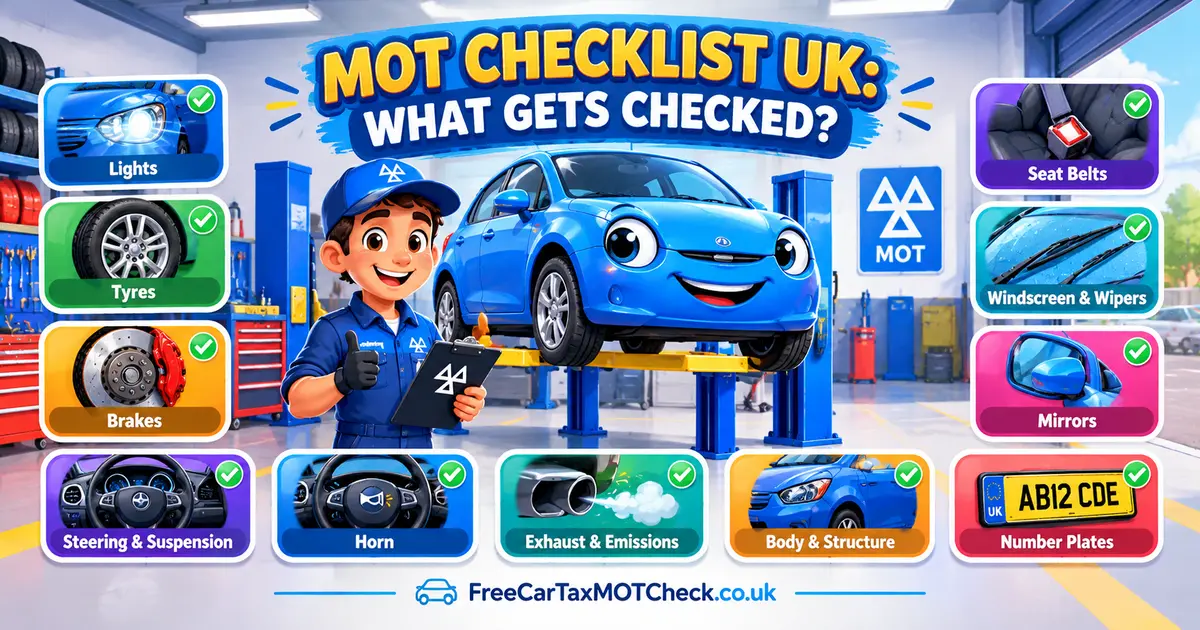
The MOT (Ministry of Transport test) checks that a vehicle meets road safety and environmental standards. For class 3 and 4 vehicles (cars and light vans), the inspection covers the following categories:
- Lights: headlamps, indicators, brake lights, fog lamps and the number plate light.
- Steering and suspension: the steering column, suspension components and power steering.
- Brakes: the service brakes (foot brake) and the parking brake (handbrake).
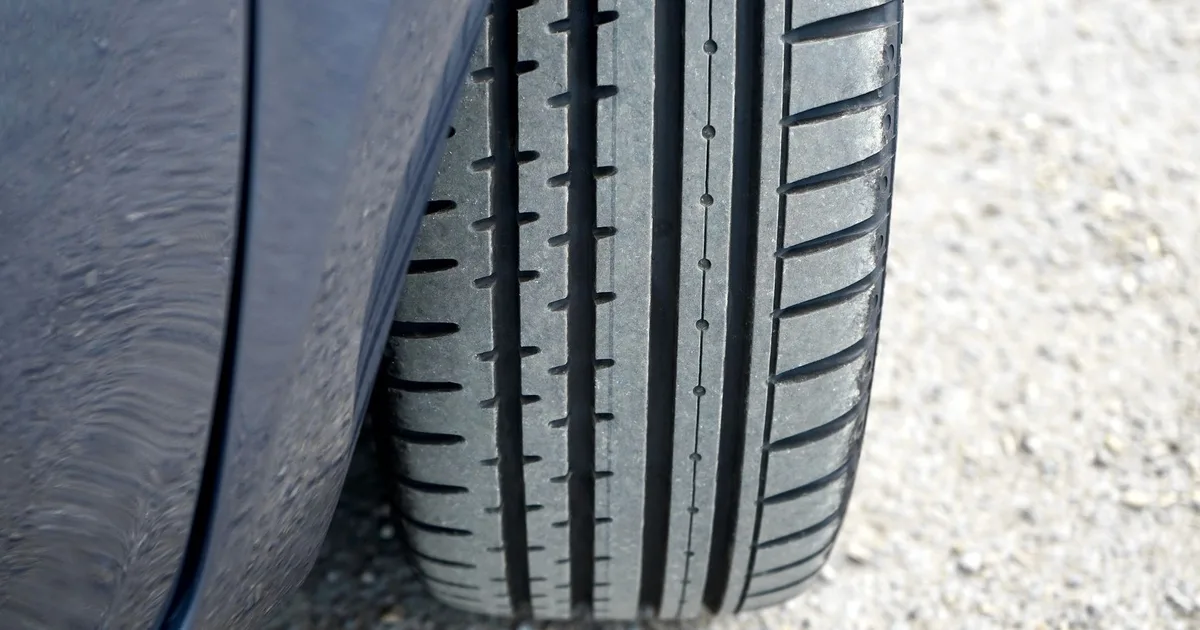
- Tyres and wheels: tread depth of at least 1.6mm across the central three-quarters of the tyre, overall condition and secure wheels. Tyre pressure is not checked.
- Seatbelts: the condition and operation of all seatbelts.
- Windscreen and wipers: screen condition, washer operation and wiper blades.
- Mirrors: the interior mirror and at least one exterior mirror.
- Horn: must work.
- Exhaust and emissions: exhaust integrity and emission levels, tested to different limits for petrol and diesel vehicles.
- Body and structure: doors, boot, bonnet, bodywork condition and chassis integrity.
- Vehicle identification: registration plates must be correct and legible, and the VIN must be present.
What an MOT Does NOT Check
A common misconception is that the MOT assesses the internal mechanical condition of the engine, clutch or gearbox. It does not. These components are outside the scope of the test, so a vehicle can pass its MOT while still having a developing mechanical fault. Regular servicing remains the appropriate way to monitor these parts. A free car check can confirm a vehicle's basic tax and MOT status alongside this checklist.
Most Common MOT Failures
DVSA data shows that lighting and electrical defects, suspension problems, tyre issues and brake faults account for the largest share of initial MOT failures. These are also among the easiest items to inspect yourself beforehand. For the full breakdown of common MOT failure reasons, including category-level statistics, see our dedicated page.
Use This MOT Checklist Before You Book
Working through each item on this list yourself before the test reduces the chance of an avoidable failure. Check that all lights illuminate, tyres meet the tread and condition requirements, wipers and washers operate, the horn sounds and seatbelts retract and fasten correctly. Any defect you identify can be rectified before the test rather than after a fail.
Frequently Asked Questions
Ready to Check a Vehicle?
Get instant access to MOT history, tax status, and comprehensive vehicle information
Check a Vehicle Now