Electric Car Road Tax UK: What Changed in 2025 and What You Pay
Why electric cars are no longer road tax free
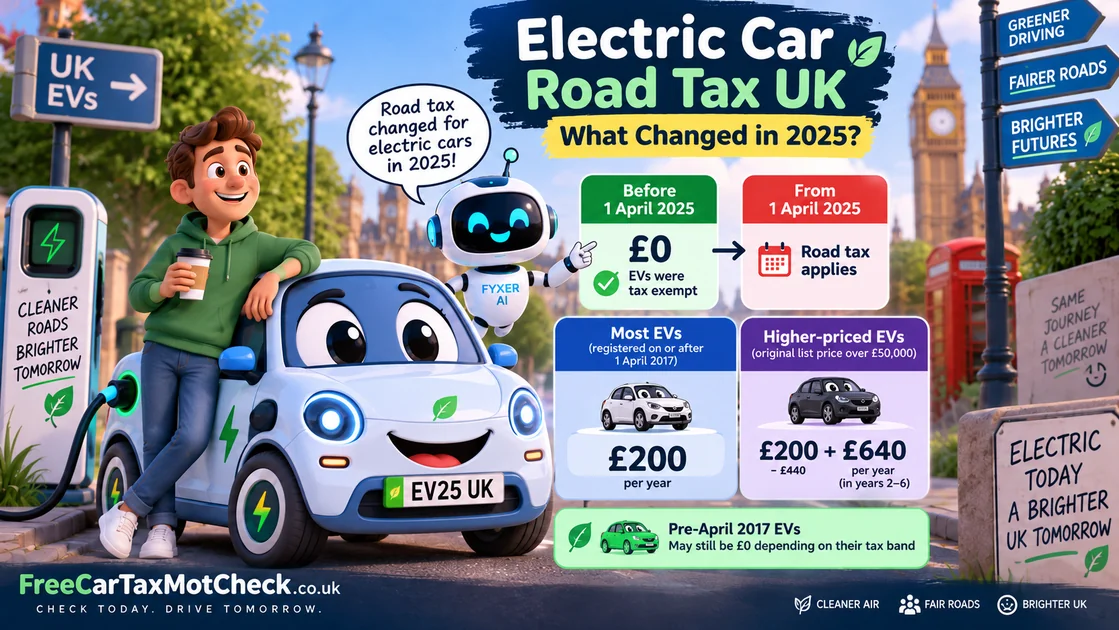
For several years, battery electric vehicles (BEVs) were exempt from Vehicle Excise Duty (VED), the tax most drivers know as road tax. That exemption ended on 1 April 2025. From that date, electric cars are taxed at the same standard annual rate as petrol and diesel cars.
The change was made because the number of electric cars on UK roads had grown substantially, and the government decided that zero-emission vehicles should contribute to the same motoring tax system as other cars. The practical effect is simple: do electric cars pay road tax now? Yes, in the same way as a conventional car. Anyone searching for electric car road tax changes will find that the old zero-rate treatment for new BEVs has been removed.
What electric cars pay now
From 1 April 2025, the standard annual VED rate for most cars registered on or after 1 April 2017, including electric cars, is £200 per year. This is the figure that answers the question of how much is electric car road tax UK drivers should budget for.
Before the change, a new electric car paid £0 in VED. The difference is therefore £200 a year for a standard-rate EV. Electric car road tax 2025 is not a separate or higher rate for EVs; it is the same standard rate applied to petrol and diesel cars in the same registration category. Plug-in hybrid vehicles (PHEVs) are treated differently and pay their own rate based on CO2 emissions.
The expensive car supplement for electric cars
The expensive car supplement applies to cars with a list price over £50,000. It is charged in addition to the standard rate. The supplement is currently £440 per year, which brings the total to £640 per year for a qualifying car.
The supplement applies for years 2 through 6 of the vehicle's registration. Electric cars are not exempt from it. This means the electric car road tax expensive car supplement can apply to higher-priced EVs, so a costly electric model may cost £640 a year rather than £200 during those years. Buyers comparing running costs should check the original list price of any EV, not just its current market value, because the £50,000 threshold is based on list price.
Which EVs are affected and which are not
The registration date determines what an electric car pays. EVs registered on or after 1 April 2017 fall into the standard rate system and pay £200 per year, plus the expensive car supplement where the list price exceeds £50,000.
EVs first registered before 1 April 2017 pay the rate for their emission band. Zero-emission vehicles in this category pay £0, which is the lowest band. So an older electric car registered before April 2017 may still be road tax free, while a newer one is not. This is the key distinction behind electric car road tax from April 2025: the change affects newer BEVs, not pre-2017 zero-emission cars.
How to check and pay EV road tax
Drivers can tax an EV online at gov.uk/vehicle-tax or by post, exactly as they would any other vehicle. The process is identical, and there is no separate EV procedure. Payment is made against the standard rate, plus the expensive car supplement where it applies.
To confirm a car's current tax status and MOT expiry, the free DVLA vehicle enquiry service can be used for any vehicle, including electric and hybrid cars. This is useful before buying, alongside a free car check and the steps in our electric car check guide. If a vehicle is untaxed, it is worth understanding the penalties for driving without tax before taking it on the road. For a broader set of checks, see our used car buying checklist.
Frequently Asked Questions
Ready to Check a Vehicle?
Get instant access to MOT history, tax status, and comprehensive vehicle information
Check a Vehicle Now