MOT Advisories Explained: What They Mean and What to Do
What MOT Advisories Are and What the Three Defect Categories Mean
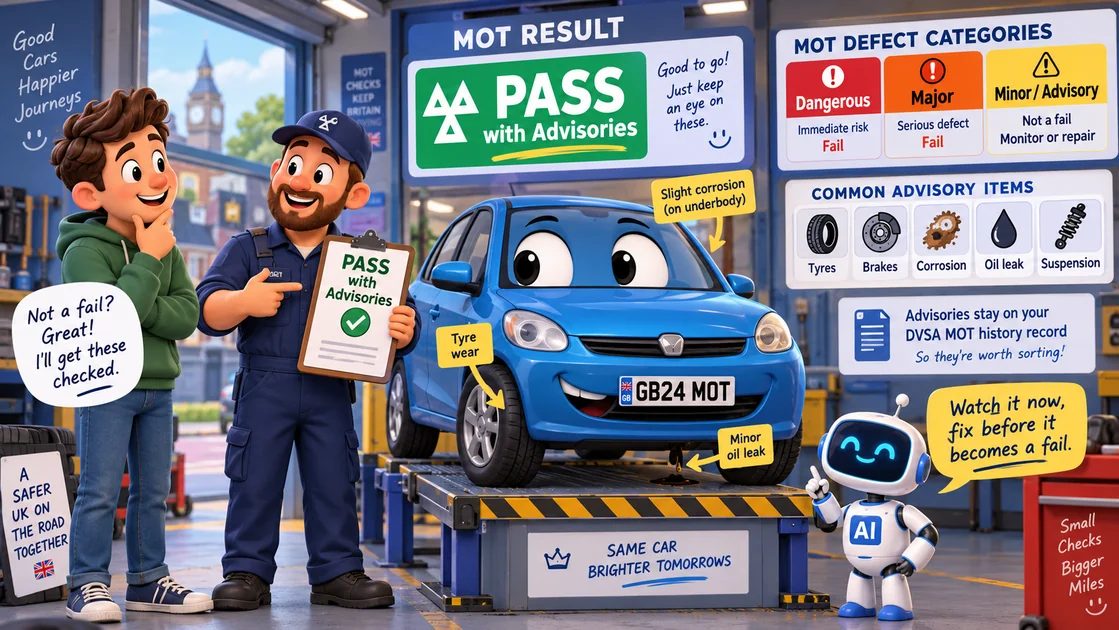
An MOT advisory is recorded when a tester finds a defect that is not serious enough to fail the test but which should be monitored or repaired. The car passes the MOT despite having advisories, so an advisory is not a failure and does not stop the vehicle being used on the road.
To understand the MOT advisory meaning, it helps to know that the DVSA sorts every defect found during a test into one of three categories:
- Dangerous — the vehicle must not be driven until the defect is repaired.
- Major — a failure category; the vehicle cannot be used on the road until repaired.
- Minor — recorded as advisory information on the MOT certificate. The car passes, but the driver is informed of the issue.
So when people ask what do MOT advisories mean, the short answer is: the car passed, and the tester has noted something worth watching. The advisory appears on the certificate alongside the pass result, and the MOT certificate explained guide covers how those entries are laid out.
How to Check MOT Advisories Free
Advisories are stored permanently in the DVSA MOT history record and are visible to anyone who searches by registration number. To check MOT advisories, use the official DVSA service at gov.uk/check-mot-history. The search is free and shows the full test history for a vehicle, including advisories from every previous test.
Because the record is held by the DVSA rather than by the seller, it cannot be edited or tidied up before a sale. A MOT history check therefore gives a buyer an independent view of how the car has been maintained over the years.
Do MOT Advisories Have to Be Done?
There is no legal obligation to repair a minor advisory item before the next MOT. Advisory items do not make it illegal to drive the car, so are MOT advisories compulsory to act on? No — not at the point they are issued. However, if an advisory item deteriorates and becomes dangerous, driving it would be an offence.
The practical question of how long do MOT advisories last has two answers. The entry itself stays on the DVSA record permanently, but the underlying defect may worsen. A minor item can become a failure item at the next test if it deteriorates, which is why advisories are worth treating as a maintenance to-do list rather than a formality. Items that affect steering, brakes, tyres or structural strength deserve attention sooner than cosmetic notes.
The Most Common Advisory Items
Common advisory items include tyre tread approaching the legal minimum, minor corrosion, slightly worn brake pads or discs, minor oil leaks, and suspension components showing early wear.
- Tyres — tread near the legal minimum will fail once it crosses the limit, so replacement is usually a matter of weeks or months, not years.
- Brakes — worn pads or discs are a safety-critical system. They should be checked promptly and replaced before they reach the failure threshold.
- Corrosion — minor surface corrosion may be harmless, but corrosion near structural or suspension mounting points needs urgent inspection.
- Oil leaks — a minor weep is often low priority, but a leak that worsens can affect other components or fail on fluid loss.
- Suspension wear — early wear can progress quickly and affects handling, so it should be monitored at every service.
As a rule, anything touching brakes, tyres, steering or structure needs urgent attention; cosmetic and minor seepage items can be monitored.
Buying a Car with MOT Advisories
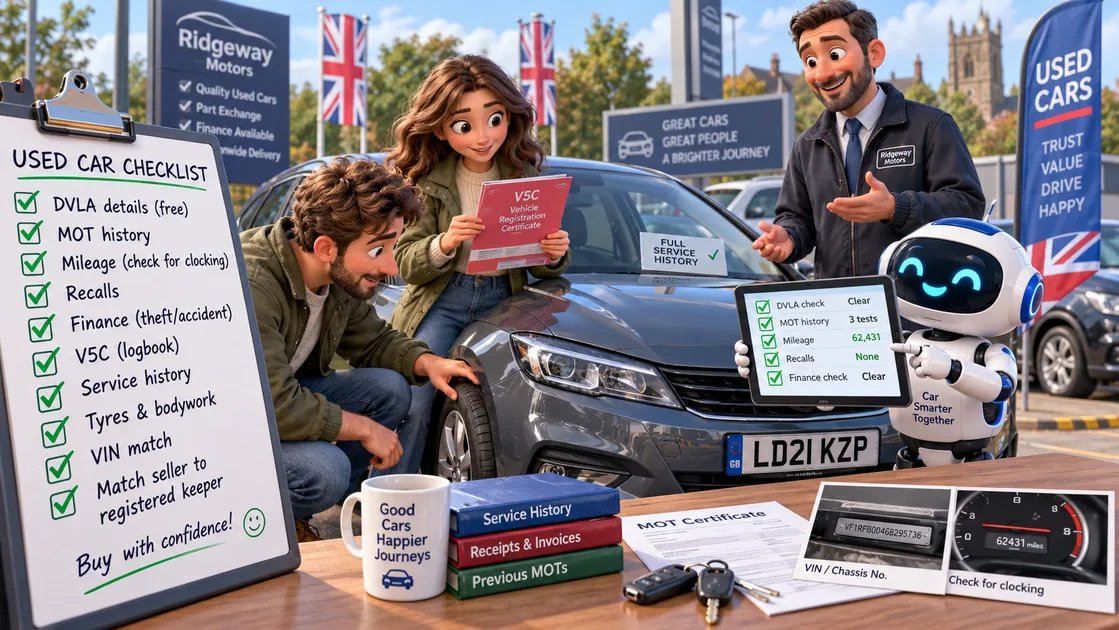
GOV.UK recommends checking the MOT history for repeated advisories as part of the pre-purchase check. Buying a car with MOT advisories is not automatically a reason to walk away, but the pattern matters. The same advisory appearing test after test suggests the owner ignored it, and the repair bill may soon land with the new keeper.
Use the history to negotiate: repeated tyre or brake advisories justify a lower offer or a request that the work be done before purchase. If advisories point to structural corrosion or recurring suspension faults, walking away is often the safer choice. A used car buying checklist helps structure that inspection, and it is also worth knowing the consequences of driving without a valid MOT before any deal is agreed.
Finally, can MOT advisories be removed? Once issued, they cannot be removed from the digital record. They stay visible to any future buyer, which is exactly why they are useful evidence when assessing a used car.
Frequently Asked Questions
Ready to Check a Vehicle?
Get instant access to MOT history, tax status, and comprehensive vehicle information
Check a Vehicle Now