Classic Car Tax and MOT Exemption: The 40-Year Rule Explained
What the 40-year rolling exemption is
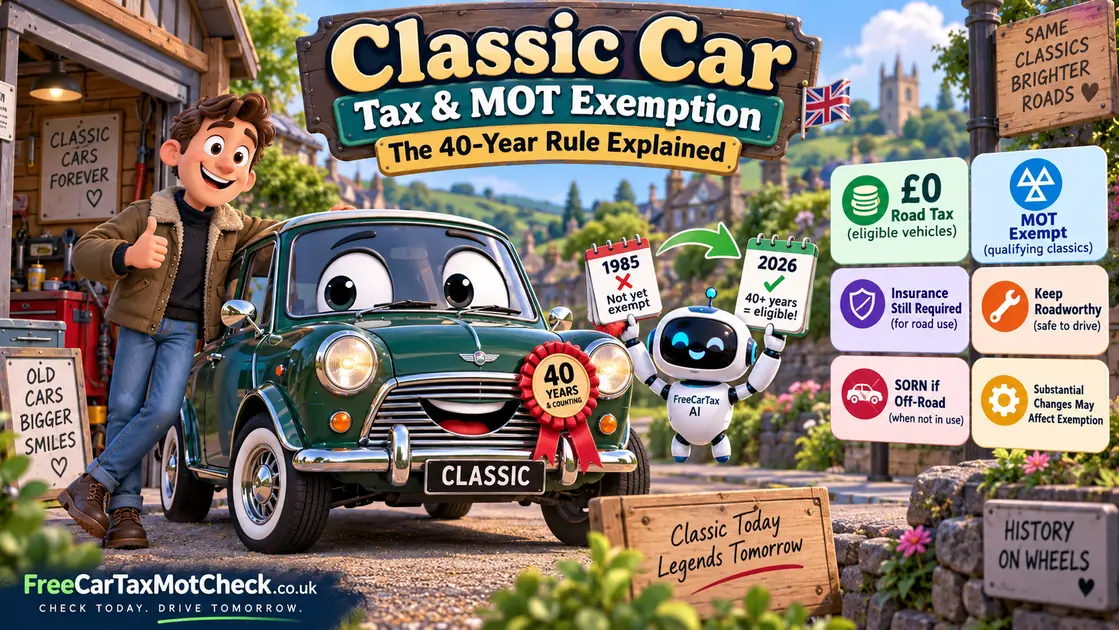
The classic car tax exemption is built on a simple age test. Under the rolling 40-year exemption, a vehicle manufactured before 1 January 1986 qualifies as a historic vehicle for the 2026-2027 tax year. The cutoff is not fixed: it advances every year on 1 April as the 40 years roll forward, so a vehicle that does not qualify this year may qualify next year without any change to the rules.
This is what owners mean by the 40 year car tax exemption. The date of manufacture, not the date of first registration, is the starting point, which is why a vehicle built in late 1985 but registered in 1986 can still qualify. The exemption applies to cars, motorcycles, vans and other vehicles, so the same test covers a classic motorcycle or a historic light commercial.
What the historic vehicle exemption covers
Once a vehicle is registered as historic, the historic vehicle tax exemption uk rules make road tax free. There is no annual VED charge, so a qualifying vehicle is genuinely a classic car road tax free case. The owner must still register the vehicle as taxed at the free rate or declare it off the road with a SORN. A vehicle cannot be left untaxed and used on the road.
The classic car mot exemption works in parallel. Historic vehicles are exempt from the MOT test, which answers the common question of when is a car exempt from mot: once it reaches the qualifying age and is registered as historic, no statutory test is due. To tax a historic vehicle as free, the owner applies through gov.uk/vehicle-tax in the same way as for a standard vehicle, selecting the historic vehicle class where prompted.
What the exemption does not cover
Insurance is still required for any historic vehicle used on public roads, regardless of the tax and MOT exemption. The MOT exemption removes the test, not the need for cover, and driving uninsured remains an offence.
If the vehicle is kept off the road and not used or parked on a public road, a SORN is required instead of free tax. The substantial change rule is the other limit. The exemption does not apply to vehicles that have been substantially changed from their original specification. GOV.UK defines this as a vehicle where the chassis or body, the axles or running gear, or the engine type has been replaced with a different type. Minor repairs and restoration using period-correct parts do not count as a substantial change, so a rebuilt but faithful classic usually keeps its exemption.
How to check whether a vehicle qualifies
Start with the registered age held by the DVLA. A free car check shows the recorded make, model and registration details, which helps confirm the vehicle's identity before any application. The date of manufacture is the deciding factor, and where this is unclear, documentary evidence such as a dating certificate or the original registration documents may be needed.
An MOT history check is useful for older vehicles that were tested before the exemption applied, because it shows past test results and recorded mileage. Understanding what a test record contains is also helpful when reviewing older paperwork, as set out in this guide to the MOT certificate explained.
Practical tips for classic car owners
Although no statutory test is due, GOV.UK recommends that owners of historic vehicles keep them in a roadworthy condition and have them checked regularly. Many owners arrange a voluntary inspection with a specialist, which also supports insurance and resale value.
Carry the paperwork that shows the vehicle's status: proof of insurance, evidence of the free tax or SORN, and any dating evidence for the vehicle's age. If a vehicle is used without valid tax or MOT where one is required, the consequences are serious, and the penalties for no tax or MOT explain the risks. The rolling mot exemption is a benefit, not a substitute for maintenance.
Frequently Asked Questions
Ready to Check a Vehicle?
Get instant access to MOT history, tax status, and comprehensive vehicle information
Check a Vehicle Now